
MASTERS VISA

Education

Education

The New Study Abroad: Why Indian Students Are Opting for Domestic Degrees

The landscape in higher education for Indian students has, over the last couple of years, seen a significant change. The enchantment of a foreign degree is slowly wearing off. With increasing global tensions, tightening of visa conditions, and a general uncertainty in the economic outlook, more Indian students and their families are now looking seriously at domestic education as a genuine, attractive alternative. This shift is not some short-term reaction to current global events but shows a deeper attitudinal change in how Indian students approach higher education. The Reshaping of Indian Education Trends Since then, countries like the US, UK, Canada, and Australia have been major destinations for Indian students going for advanced education in those countries. However, off-and-on geopolitical problems and economic constraints in those countries made them less attractive. Stringent visa policies have also led to a higher rejection ratio, and public unrest and political tensions in regions like Russia and Ukraine and in parts of the UK are further discouraging students. For instance, since the Russia-Ukraine conflict began, a lot of Indian students have started exploring options even within the country. Recent news reports about unrest in Bangladesh, which had become a destination for medical studies as an alternative, have spurred Indian students to think twice. The spiking frequency of violence and political unrest has made parents and students worry about such destinations. Challenges for Studying Abroad and the Rise of Universities in India The social challenges have, however, prompted Indian universities to start getting into the breach. Platforms like Collegedekho have rebranded from being a platform for greater study abroad opportunities to one blowing the trumpet on domestic study. “We are now focussing on the domestic market,” says Ruchir Arora, co-founder of Collegedekho. The shift in strategy is also because of the changing wave: students are now going to Indian institutions because nobody is really sure about the international educational paradigm now. What was once considered plan B has now emerged as a preferred choice—Indian colleges. With foreign universities increasingly setting up shop in the country and private institutes introducing new kinds of programs, the clamour for India as a study destination is getting loud. Students who earlier looked at the west are now seriously contemplating the alternative of pursuing their degrees at home-country colleges. This trend has also been noted by education consulting companies like Career Mosaic and Crimson Education India. “Due to this uncertainty, a significant number of high school students are currently considering Indian universities as serious options for their primary US/UK shortlist,” says Kunal Mehra of Crimson Education India. This view is echoed by Manisha Zaveri, joint managing director of Career Mosaic, which is expanding its domestic footprint by brokering partnerships between Indian and global universities. The Future of Domestic College Benefits The numbers say it all. While the number of Indian students opting for studies overseas from India grew by 45% in 2023, in 2024, this growth finally started to decelerate and was reserved for a dramatic slowdown with an increase of only 1.28% as compared to the previous year. Ministry of External Affairs figures put this number for 2024 at 1,335,878 Indian students abroad, up fractionally from 1,318,955 in 2023. Other platforms, such as iSchoolConnect, have reported a 12% rate of deferral, which suggests that students are either postponing or reconsidering their study plans in foreign countries. With quality education becoming accessible even in smaller cities and states in India, the attraction to stay in the country grows. With global universities establishing their campuses in India and Indian ones offering competitive programs, the dream of a foreign degree might soon settle into the aspiration of a world-class education within India’s borders. Conclusion It also brings with it a new paradigm for the Indian student amidst changing education dynamics across the globe and the new-found rise of Indian universities. Foreign markets have become more volatile, and with such volatility, the benefits accruing from pursuing a degree at home are made even clearer. Indeed, it is quite possible that the future of higher education for Indian students lies right in their own backyard, where they can achieve the most devoutly wished-for academic and career goals without the risks and uncertainties involved in studying abroad.

College program cuts
Education

The Impact of College Program Cuts on Students and the Future of Higher Education

Colleges in the U.S. have recently been faced with the difficult reality that program cuts are quite open, thus dismantling students’ dreams and academic plans. Given the rising operational costs, dwindling enrollment, and sunset of federal COVID relief funds, institutions of higher education across the country have been compelled to make hard choices if they are to remain afloat. From large universities down to smaller colleges, it’s a pattern: programs slashed, majors cut, and students on their own to readjust plans in light of an education system in rapid flux. The Hard Reality Behind College Program Cuts One of the most striking examples could be the story of Christina Westman, a student at St. Cloud State University in Minnesota. Westman had planned to work as a music therapist with patients with Parkinson’s disease and stroke. But the university scotched her plans when it announced it was axing its entire music department, along with 42 degree programs and 50 minors, altogether. For Westman and so many others like her, these cuts have implications that extend much further than a hassle or two, reaching deep into uncertainty and nervousness when it comes to finding new academic paths. The latest decisions are not singularly in the case of St. Cloud State University. Campuses and colleges nationwide are racing against time to alleviate similar challenges. The slide in college enrollment that began during the pandemic has squeezed budgets. Some had hoped that, with vaccines rolling out and health conditions improving, enrollment figures would recover to pre-COVID levels. Reality has not provided much grounds for optimism. A shrinking pool of high school graduates—because of lower birth rates during the Great Recession—has been offset by fewer students choosing to pursue higher education right after graduation. Coupled with rising costs and reduced federal support, these factors have forced colleges to face their new financial reality. The Impact on Students and Faculty The cuts are not only about cost-cutting measures or reducing workforce but they also hinder students whose time, money, and efforts are already invested in the pursuit of their fields of studies. With the cutting of programs, this leaves students in a lurch, either having to transfer to another institution or sometimes even change majors. If students are in highly specialized or smaller programs, the opportunities to continue elsewhere may be sharply limited, and the disruption can be wrenching. It is not just the students who feel the impact; faculty members as well are hard hit, since many have spent teaching and mentoring careers with these very students majoring in the programs now being eliminated. For instance, at St. Cloud State University, music professor Terry Vermillion lamented the loss of the music department. He retired this spring after 34 years, saying that the pandemic had already taken a toll on music programs around the country. Virtual classes and Zoom rehearsals proved to be very inadequate for teaching music effectively. Just as these programs were getting off the ground, the decision to axe them has dealt another blow, putting both students and faculty in an uncertain position. Part of a Larger Higher Education Trend Program cuts at St. Cloud State University are part of a larger trend hitting colleges and universities across the United States. Large and small—institutions, public and private alike—have had to be hard-nosed about deciding which programs live and which die. Others have taken the more drastic action of shutting their doors entirely. Birmingham-Southern College in Alabama, Fontbonne University in Missouri, and Wells College in New York are some examples. Experts say this is only the first wave. Even colleges that aren’t immediately cutting degree programs are scouring course offerings for programs that might be duplicative or under-enrolled. The humanities have been particularly hard hit, as fewer students major in these fields than 15 years ago. With the pool of potential college students continuing to shrink and financial pressures bearing down, colleges and universities are being made to review strategies for sustainability. Some may innovate around a new way forward, while most will perhaps continue to struggle along until further cuts and eventual closure. The Future of Higher Education Program cuts in this new wave pose some quintessential questions to the future of American higher education. How will students who love these no-longer-available fields of studies be treated? How are colleges and universities to reconcile the pursuit of financial sustainability with the mission to provide broad and inclusive education? What has this trend boded for the long-term health of higher education? For students like Christina Westman, the future remains uncertain. Scrambling to get into another university and a new place to live, she’s finally starting at Augsburg University in Minneapolis. Her story serves to remind that as much as cuts to programs might be fiscally necessary, they also strike deep into students’ lives and ambitions across the country. Moreover, at such testing times, the institutions of higher learning should remember their role—imparting knowledge to humankind. Decisions taken now are going to decide the fate of education for generations to come; therefore, it becomes very important for the colleges and universities to find ways to support their students without jeopardizing their own financial viability. Conclusion The wave of program cuts washing across U.S. colleges is more than a budgetary adjustment; it constitutes part of a seismic change reshaping the very nature of higher education. Students and faculty find themselves in the crossfire as institutions deal with plummeting enrollment, soaring costs, and the end of federal relief funds that helped prop up operations through the pandemic. The future of higher education is based on the balancing act between financial sustainability and students’ academic and personal development. In a similar way that colleges continue to engage in hard choices, there comes the need to ensure that they address the well-being of their students and try as much as possible to meet their aspirations, as they have trusted them.

DAAD Scholarship 2025
Education

DAAD Scholarship 2025: Unlock Opportunities for Advanced Studies in Germany. 

The DAAD is the German Academic Exchange Service, or Deutscher Akademischer Austauschdienst. It is Germany’s most effective organisation in terms of supporting international academic cooperation. The DAAD Scholarship is among the highest and most favoured scholarships awarded to foreign graduates and doctoral candidates who wish to gain further qualifications at state-recognised German universities and institutions. This scholarship gives generous financial support that allows students to deal fully with the enriching academic environment of Germany while remaining focused on fields of interest. Scholarship Value and Benefits  Regarding this, the DAAD Scholarship 2025 has made some differential financial provisions according to the academic level of the grantees. A graduate student would receive €934 per month, which comes to about Rs 85,000, while a doctoral candidate receives €1,300 per month, or roughly Rs 1,19,000. It contains, besides the cost of living, the payments for health, accident, and personal liability insurance coverage that will enable students to focus on their studies without money worries. Besides the above-mentioned monthly allowance, the scholarship also: provides an allowance when excess travel expenses are incurred while departing from Germany; pays for travel to Germany and back, where such is not already paid by other sources. In some specific circumstances, scholarship holders may, in addition, be entitled to some other facilities like a monthly subsidy on rent or family allowance for those who move to Germany with their dependents. The scholarship will, therefore, be very attractive to international students who would like to further their academic careers in Germany.  The duration of the scholarship is connected to the study program. It ranges from 12 months for a postgraduate course to a maximum of 42 months for a full doctoral program, giving the students ample time to pursue their studies and have work experience in their fields.  Eligibility Criteria  Eligibility criteria for the DAAD Scholarship 2025 will be as follows:  Educational Qualification: An aspirant will have already passed a bachelor’s degree, which is mostly a course spanning four years in the respective stream. This therefore ensures that only candidates with a well-established educational background advance for postgraduate studies.  Professional Experience: The candidate shall have at least two years of professional experience. It explains that the scholarship targets people who have hands-on experience in their profession and would like to upgrade their skills and knowledge through advanced education.  Language Skill: Not explicitly mentioned, but most of the time, a good command over English or German is usually expected as the language of instruction of the envisaged program. The applicants must be ready to provide proof of language skill during the application process.  Eligible Courses and Programs The DAAD Scholarship 2025 funds a variety of postgraduate courses in diverse disciplines. Some of these programs are:  Master’s Programme in International and Development EconomicsMSc Development Economics Development Management Geography of Environmental Risks and Human SecurityPhD in Medical Research International Health Sustainable Development Management PhD Course Programme in Resource Nexus for Sustainability Transformations—NEXTRAMaster of Science in International Health Master of Science in Global Urban Health Master of Laws in Intellectual Property and Competition LawInternational Media Studies These programs are set to prepare students for the knowledge and ability to solve global challenges, hence making the DAAD Scholarship a stepping stone towards high-impact careers in academia, research, and industry. Application Procedure Applications for the 2025 DAAD Scholarship generally begin a year prior to the actual program start. Applications must include academic transcripts, proof of professional experience, a good letter of motivation, and language proficiency certificates when necessary. It is thus important to note what requirements your chosen program wants because they differ. They will get a chance to pursue research work in the best universities of Germany and interact with world-class faculties. Besides, they can form a global network of peers and professionals. Their DAAD Scholarship is not a price of money for a scholarship or award but an investment in the leaders of tomorrow.

Chevening Scholarship 2025-2026
Education

Chevening Scholarship 2025-2026: A Golden Opportunity for Indians to Study in the UK

Are you a leader who wishes to pursue higher education in the UK? Applications for the highly competitive Chevening Scholarship 2025-26 are now open, and this fully funded scholarship is going to be a remarkable opportunity for meritorious students from India pursuing postgraduate study in the UK. Here’s everything about the Chevening Scholarship—from its eligibility to its benefits and even the application timeline. What Is the Chevening Scholarship? The Chevening Scholarship is a UK Government international scholarship program funded by FCDO and partner organizations. This scholarship avails a brilliant opportunity to study a fully funded master’s course in the UK. Chevening Scholars come from diverse countries and diverse backgrounds yet share an aspiration for leadership and an urge to make a part in the world. Benefits of a Chevening Scholarship Being selected as a Chevening Scholar carries some benefits:All tuition fees are catered to: It caters for the whole fee of the master’s degree program.Living expenses: Provided every month to help in taking care of the scholar’s living expenses while in the UK.Travel expenses: round travel to and from the UK with an arrival allowance. Exclusive Networking Opportunities: Meet leaders and professionals from all over the UK and the rest of the world. Cultural Infusion: Be part of the dynamic and cosmopolitan culture of the UK.Global Alumni Network: One more to the already existing pool of over 60,000 Chevening alumni worldwide shall kickstart your career post-your studies, providing global openings. Eligibility Be a Citizen of a Chevening-Eligible Country: Applicants from India can apply. A bachelor’s degree, which is usually the entry requirement when planning to pursue a master’s in the UK. The applicants should have minimum working experience of two years, that is, 2,800 hours. A full unconditional offer from a UK university before the deadline. Application Timeline Chevening Scholarships have a very elaborate and competitive application process that supposedly plays out within eight months—from the application closing deadline to the announcement of the final selection. Sample of a summary of the calendar: 6 August 2024: Open, application 12:00 UTC5 November 2024: Close, application 11:59 UTC/GMT 19 Mid-November 2024–JJanuary 2025: Sifting of Applications Mid-February 2025: Interview shortlisting 19 February 2025: Reference and education documents deadline.26 February to 25 April 2025: All interviews will be conducted at British embassies and high commissions around the world. June 2025: Announcement of Results 11 July 2025: Deadline for receiving and uploading of at least one unconditional UK university offer September/October 2025: Chevening Scholars take up their studies in the UK Conclusion The Chevening Scholarship is a transforming life opportunity for Indian students with a study offer in the UK. It’s more than financial support—it’s about being able to form a global network and gain invaluable experiences. Do not let this opportunity of a Chevening Scholarship for 2025-2026 pass, because your eligibility criteria make you one sincerely desirous of making a difference in your field.

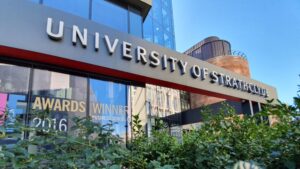
Strathclyde Business School Glasgow
Education

Strathclyde Business School Glasgow Scholarship to International Students—January 2025 Intake: Application call.

The Strathclyde Business School in Glasgow is an international, long-established, and key educational establishment. It has just announced a number of master’s scholarships for the January 2025 intake. With this, the school provides international students with the chance to fulfil their academic aspirations through financial support. These range in value from £9,000 to £12,000, depending on the course fee and the subject area, and are selected according to merit. Scholarship Details and Value Strathclyde Business School is happy to announce that it has 35 scholarships available for international students who will start in January 2025. These have worth of £9 000-£12 000 depending on the course fee a candidate pays and the subject area to which they have applied. Many scholarships are financially constrained or geographically based. In contrast, these awards are based on merit and hence target high academic levels among other achievements. The scholarship selection will take into account: Good academic performance: The candidate should have a sound record in his/her studies so far or in the past. Relevant Co-curricular Activities/Achievements: Participation and performance in co-curricular activities that support the field of study pursued. Relevant Employment Experience: Related experience relevant for an admission.Career Development: How well one can define his use of the education for career growth. Admission Criteria To be eligible for a scholarship offered by Strathclyde Business School, candidates must:Self-Funded: Candidates must not be in receipt of any other scholarship or sponsorship. Offer of Admission: Candidates must already have been made an offer for a taught Master’s degree January 2025 entry.International Fee Status: Candidates will pay the international tuition fee.Single Scholarship: Candidates may only hold one scholarship per academic year from the University of Strathclyde.Eligible Programmes: Online and blended learning programs are not eligible. Amongst others, the scholarship is offered in the following areas of study: accounting and finance, economics, entrepreneurship, human resource management, marketing, business, hospitality and tourism, management, management science, and data analytics. Application Process and Deadlines The scholarships from Strathclyde Business School start rolling early in August 2024, and the deadline is 4 December 2024. Given that it is a rolling application process, applicants are highly encouraged to make their applications early to enhance the chances of selection. Applicants are required to submit a statement of 1000 words. The areas that this statement is expected to cover include. Academic Achievements: Details of excellent academic records. Professional or extracurricular experience: relevant experiences that align with the chosen MSc program Future career goals: A clear articulation of career objectives and how the scholarship will help attain them. This statement should include a description of the candidate’s passion for the chosen field and state why he or she deserves the scholarship. This is a chance where applicants can express their strengths, aspirations, and how they are going to contribute to the program and make good use of the chance. Conclusion These January 2025 Strathclyde Business School scholarships provide an excellent opportunity for international students who would like to pursue their master’s degree in a prestigious institution with the backing of a substantial financial award. If you are eligible and have a strong academic background, this may be your chance to advance your career in line with your academic dreams.

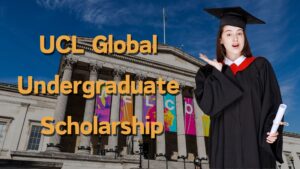
UCL Global Undergraduate Scholarship
Education

Everything You Need to Know About UCL Global Undergraduate Scholarship

Are you an international student who is looking forward to studying at one of the world’s best universities? The University College London will be very pleased to help highly talented students from low-income backgrounds wanting to pursue undergraduate studies in the UK under the Global Undergraduate Scholarship. Herein is all that you need to know about this most coveted scholarship, including eligibility, benefits, and how to apply. What is the UCL Global Undergraduate Scholarship?  The UCL Global Undergraduate Scholarship is a scheme set up by University College London to provide financial support to international students with low incomes. Its aim is to provide students all over the world with quality education, ensuring that a student doesn’t let financial constraints come in the way of his/her ambition in academics. Scholarship Value  The scholarship offered by the UCL Global Undergraduate Scholarship is highly competitive and very valuable for the recipient. There are two kinds of awards for students:  Full tuition fees and maintenance allowance: UCL provides 10 scholarships covering full tuition fees along with the maintenance allowance to be used for living expenses.  Only full tuition fees: Another 23 scholarships that only cover full tuition fees for the duration of the undergraduate program are available. Eligibility Criteria  The applicants for the UCL Global Undergraduate Scholarship must fulfil the following criteria for eligibility: Nationality: The applicant must belong to any country other than the UK. Admission Application: Applicants must have submitted an admission application to pursue a full-time undergraduate degree at UCL. Fee Status: The candidate must be eligible to pay the overseas fee rate. Low Income Background: Candidates must be from a low-income background. ‘Low-income,’ for this scenario, is defined by UCL as having a household income of £42,875 or less; however, applications from those with higher household incomes may sometimes be considered.  Processes to Apply for UCL Global Undergraduate Scholarship: The application for the UCL Global Undergraduate Scholarship will be an online application with no handling charge. Application process: Visit the official website: Go to www.ucl.ac.uk. Log in to Portico: Using your normal login details, log into UCL’s online portal, known as Portico. View Your Application: On the application screen, please click the ‘View’ button next to your ‘Active Application.’ Funding Options: Click on ‘Funding,’ then select ‘Funds Available.’ Apply for the Scholarship: Apply for the UCL Global Undergraduate Scholarship; click on the ‘Apply’ button. Save the form for future reference.  Important Points to Note The scholarship will last for the normal duration of the undergraduate program at UCL.  Holders have to notify the UCL Student Funding Office of any other sponsorship they receive to pursue their studies at UCL before and after the award of the scholarship.  Conclusion  The UCL Global Undergraduate Scholarship offers an excellent opportunity for international students from very weak financial backgrounds to pursue their academic interests at one of the globe’s premier universities. Ensure that you are not missing out on this opportunity to apply for this scholarship of a lifetime if your eligibility criteria are met.

Study in Lithuanian
Education

Your Guide to Study in Lithuania: A Rising Star in European Education

Multilingual and modern, Lithuania is a Northern European country that is fast developing into one of the most popular destinations for international students. Rich in history, vibrant with culture, and providing high academic standards, Lithuania proves to combine the best combination of academic excellence with friendliness. From world-class universities to affordability in living and exploring Europe, there is definitely something Lithuania can give to each student. Why Study in Lithuania? There are so many good reasons to choose studying in Lithuania. High-Quality Education: A great number of programs are available in almost all Lithuanian universities, recognised all over the world. Research, innovation, and practical learning have known that a student gets an education, which is not only complete but relevant to the global job market. Low tuition fees and living expenses: Lithuania, compared to other European countries, will be more or less affordable to study in and live in. This would be one of the perfect destinations where students can get quality education at an affordable cost without sacrificing too much. Cultural Experience: The rich cultural heritage combined with modern living in Lithuania offers students something very different. From the historic streets of Vilnius, its capital city, to its busy cafes and glittering art scenes, there is enough to explore and enjoy for students. Gateway to Europe: One could find so much about Lithuania, its location being one of the most prominent, which makes it a great base to explore other parts of Europe easily. Nearby countries easily connect to and hence afford students the opportunity to have a feel of different cultures as they serve or study. Requirements in the English Language In order for admission to study in Lithuania, foreign students must attest to having a good command of the English language. The table below provides the most common English Language tests accepted and the minimum scores required for the same :IELTS-minimum 6.5,GTEC CBT-1210,Duolingo English Test-105.All these tests prove that students have acquired the necessary language skills to succeed in their academic programs and campus life. Top Universities in Lithuania Lithuania hosts very many different kinds of prestigious universities that offer a wide variety of undergraduate and postgraduate programs. Some of the top universities include:Kaunas University of Technology: Known for its programs in engineering, technology, and business fields.Vytautas Magnus University: Renowned for its courses in social sciences, humanities, and international relations. These institutions are known for their academic excellence and have become one of the most sought-after choices for local and international students. Intakes for Studying in Lithuania Most of the universities in Lithuania have two significant intakes, which include: Autumn Intake: This usually commences in September and forms the core intake for most programs.Spring Intake: It usually starts in February and normally offers a limited number of programs as compared to autumn.Note that specific deadlines of programs may vary by university and are of interest to the individual, so be sure to check. Part-Time Job Opportunities for International Students International students are allowed to work part-time during their study time in Lithuania. Such experience is an excellent opportunity to gain some work experience, earn extra money, and soak in the local culture. The student can work up to 20 hours a week during term time and full-time during holidays. Many universities also offer internships and work placements as part of the programs in order to further enhance your employability. Conclusion: Your Way to Success in Lithuania Studying in Lithuania means much more than receiving a degree; it means getting a world-class education, experiencing a different culture, and opening doors to global opportunities. It offers affordable education, a friendly environment, and a strong academic reputation—elements that make Lithuania one of the top destinations for foreign students.

Study in Poland
Education

Why Study in Poland? Key Insights and Admission Guidelines

Poland has emerged to be at the top of the chart for any student who seeks a high-quality education at affordable living costs, steeped in culture and heritage. Be it undergraduate or postgraduate, Poland provides a balance of modern education with a tinge of historic charm. Here’s why one should study in Poland and what a student needs to know about the admission process. Why Study in Poland? High-Quality Education: Poland is the seat of some of the oldest and most prestigious universities in the entire European continent. Places like the University of Warsaw and Jagiellonian University enjoy a worldwide reputation for their academic excellence. Low Tuition Fees: Compared to other European countries, Poland has very affordable tuition fees, hence open to all students from different economic backgrounds. Cultural richness: Poland, with its rich history and huge cultural diversity, will give an opportunity for students to be a part of a truly immersive experience. From mediaeval castles to vivid, glowing cities, every corner of the country has something different to offer. English programs: Most of the universities in Poland have programs dedicated to full-time English studies. This makes it easy for any international student to adapt quickly and excel in his/her studies. Mobility: Since Poland is located in the very center of Europe, one has a big chance to access most of the countries around Europe, travel, and explore numerous cultures. Key Points for Intake and Admission Deadlines While planning to study in Poland, knowing the intake periods and application deadlines is very important. Main Intake:Period: September/OctoberApplication Deadline: May–JJuly (varies by university) Secondary Intake:Period: February/MayApplication Deadline: October–DDecember (varies by university) English Language Test Requirements Proof of English proficiency is required for all international students whose mother tongue is not English. The tests accepted and the required scores for these tests are as follows:IELTS Academic:For undergraduate programs: 5.For masters: 6.5TOEFL:iBT: 79PBT: 550Duolingo: 105 Course Fees in Poland Studying in Poland comes at very affordable fees, as it varies from course to course and institution to institution. Masters in Poland:Course Fees: INR 2L–IINR 5L per year Undergraduate Programs in Poland:Course Fees: INR 2.5L-IINR 20L per year Documents Needed to Study in Poland Do make sure to get your documents ready very well in advance so that the application process happens as smoothly as possible. The checklist of the essential documents is as follows: Language Proficiency: Submit test scores from IELTS with a score of 6.0 or higher, or TOEFL with a score of 80 or higher.Academic transcripts: These are official records from previous institutions attended.Passport Photographs: It usually requires 2-3 passport-sized photographs.Statement of Purpose: This includes a letter stating your motivation and academic goals.Letters of Recommendation: These are usually 2-3 letters recommended for any graduate program. Conclusion Poland has provided an opportunity for lots of students to acquire a world-class education and rich cultural heritage in diversity within the boundaries of the European continent. It offers one of the best options for international students with its cheap tuition fees, diverse programs, and excellent, homely environment. Whether you pursue an undergraduate or a master’s degree, Poland’s universities will be the pathway to success. All detailed information regarding the application process, deadlines, and requirements for admission is available on the relevant official websites of the universities. Do not hesitate—use this opportunity to enrich your education in Poland!

Visa Challenges for Indian Students
Education

Visa Challenges for Indian Students Spark a Quest for New Study Destinations

As visa hurdles tighten in traditional study destinations like the USA, UK, Canada, and Australia, Indian students are increasingly exploring alternative countries for higher education. Recent policy changes, growing nationalist sentiments, and rising costs are driving this shift, pushing students to seek out less restrictive environments that offer quality education and better opportunities. The Changing Landscape of Traditional Study Destinations For decades, the USA, UK, Canada, and Australia have been the top choices for Indian students aspiring to study abroad. However, recent visa restrictions and stringent policies have made these destinations less accessible. Here’s how these changes are impacting Indian students: United Kingdom: The UK has seen a surge in international students over the last five years, leading to policy changes that now limit visa grants. In March 2024, the UK reported a 6.2% reduction in visa grants for primary applicants, the first decline in five years. The removal of allowances for dependents of international students and increasing visa fees are further deterring prospective students. Canada: Known for its friendly immigration policies, Canada has introduced a two-year cap on study permits for new arrivals, significantly impacting the flow of international students. The financial requirement for a study permit has also risen, and new rules now exclude certain students from the Post-Graduation Work Permit (PGWP) program. These changes have resulted in a decline in study permit approvals, with a noticeable 50% reduction in approval rates between January and April 2024. Australia: Australia’s migration strategy, unveiled in March 2024, aims to control the number of international students. The country has implemented stricter visa requirements, increased fees, and introduced a soft cap on student numbers, all of which have made it a less attractive option for Indian students. The Emergence of New Study Destinations With traditional destinations becoming more challenging, Indian students are now turning to other countries that offer easier visa processes, affordable education, and quality programs. Asian and European nations are increasingly becoming popular alternatives: Germany: A top choice in Europe, Germany is gaining traction due to its high-quality education system and welcoming visa policies. According to a recent survey, 50% of respondents identified Germany as an appealing study destination. Ireland: Ireland’s international student enrolment reached a new peak in 2022-23, marking a 12% increase from the previous year. Its growing popularity is attributed to its English-taught programs, favorable visa policies, and strong job market. The Netherlands, Singapore, and Malaysia: These countries are investing heavily in their education sectors, offering globally recognized programs and attractive visa options for international students. They are fast becoming preferred destinations for those looking beyond the traditional Anglophone markets. Japan: Japan is also emerging as a viable option, with its straightforward visa process and strong focus on skill development. The country’s ambassador to India has actively encouraged Indian students to consider Japan for their studies and career opportunities. Conclusion As visa challenges continue to grow in traditional study destinations, Indian students are increasingly exploring new opportunities in countries that offer more accommodating policies and quality education. The shift towards alternative study destinations reflects a broader trend of diversification in international education, with Asian and European countries stepping up to meet the demand. For Indian students, these emerging destinations offer a chance to pursue their academic goals in a supportive and welcoming environment, free from the uncertainties of stricter visa regulations.

Higher education enrollment strategies
Education

How Higher Education Enrollment Strategies Are Reshaping Opportunities for Stranded Students After University Closures

In a shocker, the University of the Arts in Philadelphia announced last week it was closing, leaving its students up in the air. But the sudden closure has been quickly matched by an equally surprising number of interest from other colleges looking to scoop up suddenly displaced students. With offers of tuition discounts or even free housing, schools are making five-star pitches to lure in new students, demonstrating a rare opportunity for both the students and the schools themselves.  The Race to Woo Students  When UArts closed, other schools swooped in to scoop up the stranded students. Ursinus College, a private liberal arts college in Pennsylvania, has dangled a particularly enticing offer: 50 percent off its $60,000 tuition. Likewise, Drexel University, just two miles from the UArts campus, offered the same discount. The offers underscore the cutthroat environment of higher education, in which student bodies represent budgets.  One example is Point Park University in Pittsburgh, which will give up to 75 students free housing for a semester. That incentive alone does much more than ease the pocket, reflecting its commitment to supporting people in need.  La Salle University, even when fighting its own enrolment battles, opened its doors as much as possible to UArts students. The College of New Jersey extended its application deadline and waived application fees to make the transfer process easy and seamless. A Strategic Move for Institutions For many of these colleges, being in a position to welcome UArts students was more than just an act of charity; it was strategic. The economics of higher education mean that the sudden increase in students will be a windfall for many—eespecially smaller—ccolleges whose enrolments are slipping.  This has been an especially unsettling year for colleges, with problems with the Free Application for Federal Student Aid leaving many administrators guessing about how many freshmen will show up on campus this fall. In recruiting UArts students, these colleges are shoring up not only seats but also their bottom line. A Future for Stranded Students  These are life-saving opportunities for UArts students. The ability to pursue education without major financial dislocation proves to be a big relief itself. A range of options allows students to tailor the most fitting academic and personal approach.  This situation therefore puts across the message that higher education, in general, needs flexibility and adaptability. With increasing pressure being put on finances at colleges, it is this very capacity for response to changes in the market that might be different between thriving and struggling.

Scroll to Top