
MASTERS VISA

Immigration

Vietnam Tourism Boost
Immigration

Vietnam Tourism Boost: Visa Requirements Waived to Attract More Visitors

In a move geared towards boosting tourism, Vietnam Prime Minister Pham Minh Chinh has proposed visa waivers for a number of countries. This is to be done in order to push Vietnam right to the top of travel destinations within the highly competitive Southeast Asia. He has tasked the Ministry of Public Security and the Ministry of Foreign Affairs to consider the issue of visa waivers to people of several countries, especially procedures for obtaining visas, coordination between relevant ministries, and ease in travelling to Vietnam.  Current Visa Policies and Comparisons  As such, Vietnam currently exempts 25 nationalities from obtaining entry visas. This is quite low compared to the neighboring states in Southeast Asia. Malaysia and Singapore provide visa-free entry to 162 nationalities, the Philippines to 157, and Thailand to 93. Such an imbalance has thus initiated moves by Vietnam to extend its visa exemption in a bid to stay competitive within the region. Recent Improvements and Regional Development  Vietnam announced a three-month tourist visa available to all countries, while it extended visa-free stays to 45 days for nationals from 13 countries, including Germany, France, Italy, Spain, the UK, Russia, Japan, South Korea, and some Nordic countries. These changes were aimed at better reception of tourists and their longer stays. Neighbour countries are also taking steps to improve their respective visa policies. Thailand is further extending its visa-free policies, and Indonesia has the same plans for new visa-free destinations next October. It now appears that Vietnam is getting proactive to ensure that it is not left behind as an attractive destination for travelers.  Declines Addressed, Ambitious Targets Set  Despite all these efforts, international tourists visiting Vietnam in the first half of 2024 were 4 percent less than in the pre-pandemic level. It targets 18 million international tourists by year-end, and the proposed visa waivers would be an integral part of the plan to make travel to Vietnam all the more beautiful and hassle-free.  Although concrete countries to which the new visa waivers would be extended have not been announced yet, this move clearly shows Vietnam’s commitment to the revival of its tourism sector. Improved accessibility to visas will entail more foreign visitors for Vietnam and, consequently, greater entrenchment as one of the leading tourist destinations within Southeast Asia.

Switzerland limits tourist
Immigration

Switzerland limits tourist access to Riffelsee Lake: the cost of beauty, preservation

This Swiss country is a powerhouse of beauty and untouched landscapes, and now, the country is taking serious measures to save one of its most picture-perfect places. Riffelsee Lake is sited above the famous resort town of Zermatt and has introduced new measures meaning tourist access will now be controlled to protect its fragile environment.This viewpoint, like many others with truly breathtaking views of the Matterhorn and its glacial waters reflection, has become a real hotspot for visitors in search of the perfect Instagram shot. Concerns have been sparked, however, by the surge in tourism with regard to environmental degradation. Environmental Impact and Conservation Efforts The area around Riffelsee Lake has been overrun, especially in the months of June and July, by the charms of the lake with its alpine flowers such as edelweiss, gentian, and alpine golden primrose. This influx has had huge negative impacts on the local ecosystem, much of which is driven by access offered by the rack railway. Especially, the trampling of pasture land due to constant footfalls has led to the disappearance of edelweiss around the lake. Authorities in Zermatt react to these environmental concerns by starting several measures to limit the negative impacts of tourism. Visitors are now held to marked paths, and meadows have been fenced to stop the damage from progressing. Surely, one does not do this in order to keep the tourists away, but to sensitise them for the protection of the alpine environment. Within the fenced area, an alpine garden has been set up to create awareness of the diversity of flora in that region. An increasing concern in the whole of Europe. Zermatt’s initiative reflects a broader trend in Europe, where one-time popular tourist spots grapple with the consequences of social media-driven tourism. The same problem is cropping up in other European locations, be it in Florence, where the inappropriate antics of a tourist with a Roman statue sparked outrage, or in the Swiss village of Lavertezzo, which has been swamped by visitors and litter since a Facebook posting described it as a Maldives-like destination. While tourism is of central importance to Switzerland’s economy, increasingly, people are concerned that locals actually profit less from tourism compared with the environmental and cultural damage it causes. Moreover, the majority of visitors are interested in taking perfect pictures at all costs—most of them at the expense of full appreciation for the natural beauty and cultural heritage of the region. Finding Balance: The Zermatt Way Contrary to all expectations, the adopted approach makes Zermatt a unique model of how tourism can go hand in hand with the preservation of the environment. Planting back Edelweiss so that future generations can also have the opportunity to see how breathtaking the beauty of Riffelsee See is, and embracing responsible tourism: the town is working towards it. The next alpine garden is purposed not only for conservation but also for education, so that every visitor should understand the necessity of its existence for the preservation of the environment. Zermatt’s efforts underline how essential sustainable tourism practices are in maintaining the natural and cultural identity of prime destinations. In a world where the rise in the number of visitors at play is still an evolving travel concept, striking a balance between drawing people in and protecting the environment will be very critical to the integrity and beauty of some beloved landmarks, such as Riffelsee Lake.

Portugal Immigration Policy
Immigration

Portugal Immigration Policy: No Longer the Most Welcoming Destination in Europe 

Touted once as one of the most welcoming countries in Europe, Portugal is now taking serious steps towards revising its immigration policy. The rightist government has recently annulled the “manifestation of interest” mechanism—an important stipulation that earlier made residency easier for non-EU residents.  Residency Rules Changed  Through the “manifestation of interest,” non-EU nationals were granted permission to come to Portugal without getting a job first. They were granted residency after having paid social security for a year. It was very popular with digital nomads—remote workers paying into the social security system while living and working from Portugal—and those working in lower-wage sectors, where they might not have been able to find pre-approved employment.  Advocates of this residency route make the case that it integrated more people into Portugal’s formal economy, who could then pay tax as they settled into more permanent employment. Others have blamed the inflow of foreign workers for Portugal’s continuing housing crisis, though this is disputed by those on the left. Economic impact of migrants  Migrants play a crucial role in Portugal’s economy, contributing up to 14% of the total economic output. In 2022, they contributed around €1.6 billion ($1.7 billion) to the economy while receiving €257 million ($280 million) in social security benefits. Despite these contributions, Prime Minister Luis Montenegro’s government has said it is worried about out-of-control immigration.  Montenegro stated, “We want to receive people who will be able to contribute to a more just and prosperous society in Portugal. We cannot, however, go to the other extreme and continue with our doors open.” New Focus on Immigration The government will introduce new criteria to make immigration more selective. Those that are to be fast-tracked include people from Portuguese-speaking countries, students, and highly skilled workers. According to the Portuguese outlet Publico, the most affected by the changes will be immigrants from India, Nepal, and Bangladesh. There are now some 400,000 processes of regularisation pending in Portugal. The government is looking to hire more staff and create a task force to work through the backlog.  Broader policy shifts  Since taking office in April, Prime Minister Montenegro has pressed for a tightening in immigration policies. Last year, Portugal broke up much of its golden visa programme, which granted residency to foreigners who bought at least €350,000 ($380,000) of property in popular cities such as Porto and Lisbon. Then lawmakers announced the end, in 2024, of the so-called nonhabitual residency, or NHR, tax scheme, granting foreigners a flat income tax rate of 20 percent for up to 10 years. This impending change has generated a rash of residency applications.  These measures are in place to prevent rich foreigners from holding up property prices and making housing too expensive for the local Portuguese. The recent changes to policy, however, seem to cut down sharply on the inflows of low-skilled migrant workers by putting additional barriers to entry into Portugal. In spite of these changes, early indications are that house prices in Lisbon are continuing to rise faster than those in other European cities, suggesting that there are continuing pressures on the housing market. Conclusion  The revamped immigration policies of Portugal therefore mark a huge departure from the traditionally warm welcome that the country has given. It shall be interesting to examine the possible effects on the economy, real estate market, and immigrant groups while the government starts giving preferential treatment and tightening its regulatory clamps. Most of all, this trend demonstrates a global phenomenon as countries revise their policies on immigration in light of economic pressures and social dynamics.

Children of Legal Immigrants in the US
Immigration

Deportation Haunts Children of Legal Immigrants in the US: What’s in Store for Indian Americans? 

The plight of the children of legal immigrants in the US, often referred to as “documented dreamers,” remains a thorny issue. Many of these young people are Indian Americans who arrived in the US with their parents on legal visas and now risk being deported as they turn 21 and age out of their dependent status. This pertains to about 250,000 children, a significant number of whom are of Indian origin.  Legislative Gridlock and Blame Game The White House lost no time in pointing fingers at the Republicans over the legislative gridlock that will not allow this matter to be brought to a close. “I mentioned the bipartisan deal negotiated in the Senate, where we developed a plan to assist the individuals known as documented Dreamers.” And sadly, Republicans voted it down twice,” said White House Press Secretary Karine Jean-Pierre.  In June, a bipartisan group of 43 lawmakers, led by Senator Alex Padilla and Representative Deborah Ross, called on the Biden Administration to take immediate action to safeguard these documented Dreamers. At risk of self-deportation because of a long green-card backlog, these young people were raised and educated in the US. Voices of Documented Dreamers  Organisations such as Improve The Dream have been championing the cause of these kids. Conducting over 100 meetings with congressional offices and senior administration officials to urge them to act, they have brought the need for urgent action to the forefront. Founder of Improve The Dream, Dip Patel, said, “It’s really disappointing to see a lack of action and associated proposed regulations deprioritized/delayed. It’s time for action.”  Their stories are simply riveting. Consider Jefrina, a graduate student in Minnesota, who arrived in the US from India at the age of seven. She has spent almost 19 years in the US, calls it home, and is now about to step into a more uncertain phase in life as her current visa status comes to an end. Similarly, Praneetha, a cloud engineer in Texas, is in her [endif]>fifteenth year in the US, but there is no clear path to permanent residency for her. She added that she had to continuously switch visas to stay.  Another casualty, Roshan, who was forced to leave the US last month, grew up in Boston, graduated from Boston College, but had to move to India because he aged out of his dependent visa status. These stories show the human component of legislative inaction.  The Call for Urgent Action  He makes the economic and moral case for these young people to be able to stay in the US. Most of them, he points out, are STEM and health-care talents that the US needs more of: “Our country is not only losing young talent, but we’re also losing many of their parents, who have years of practical experience. The economic rationale is evident, and the moral argument is unmistakable. It is common sense.”.  The bipartisan America’s Children Act would fix this, but until it becomes law, administrative action is desperately needed now. The administration has all the tools to offer relief. To date, this population has been left out of benefits afforded to so many others. Conclusion  Thus, the fate of the documented dreamers, especially Indian Americans, is relegated to limbo. Clearly, lawmakers and advocacy groups are working on legislative and administrative fixes, so hopefully these young people will be able to stay in this land they call home and continue to further its future. It is time to act upon it, and the administration should take up this matter sincerely to avoid further loss of talent and human potential.

Indonesia golden visa
Immigration

Indonesia Golden Visa: A New 10-Year Opportunity for Foreign Investors

The administration in Indonesia has rolled out the “Indonesia Golden Visa” in a bid to corner key foreign investments into Southeast Asia’s biggest economy. This would be embedded by introducing visas that can run up to ten years so that high-level economic growth is encouraged through the motivation of international investors. Under the Indonesia Golden Visa, a proper atmosphere is being created so that big contributions towards economic growth can come in from abroad. How the Golden Visa Works: Options and Requirements The Golden Visa comes with two major options for investors: Individual Investors: Five-Year Visa: The applicant shall make an investment of $2.5 million within a limited liability company in Indonesia or $350,000 in government bonds, public company stocks, or deposits. Ten-Year Visa: applicant to make an investment of $5 million in a limited liability company in Indonesia or $700,000 in bonds, stocks, or deposits.  Corporate Investors: Five-Year Visa: The company should invest $25 million to obtain a visa for the company’s directors and commissioners.Ten-Year Visa: An investment of $50 million is required. Investments in Indonesia’s new $32 billion capital city, being built in the jungles of Borneo, bring reduced requirements: $5 million for a five-year visa and $10 million for a ten-year visa. Indonesia Golden Visa Motivations According to President Joko Widodo, popularly known as Jokowi, this was a means towards attracting “high-quality investors” who will be meaningful in adding value to the economic development of Indonesia. The measure is part of a broader strategy that seeks to make the process easier for foreign nationals to invest in and tap from the huge, growing Indonesian economy.  According to Silmy Karim, head of Indonesia’s immigration agency, nearly 300 Golden Visas have already been granted since the trial phase began last year, raking in US$123 million of investments. This interest thus saw a positive response to this interest, which potentially can grow. Special Status for Foreign Nationals of Indonesian Descent In addition to the Golden Visa, there could also be a special additional status for foreign nationals of Indonesian stock, similar to India’s Overseas Citizenship of India. That is to say, under such a proposed scheme, persons of Indonesian origin will be able to live, work, and travel in Indonesia indefinitely, which would grant them much more mobility across the world and enable them to maintain ties with their ancestors’ homeland. This special status may come into place as early as October.  Global Context  While several countries, like Canada, Britain, and Singapore, have just announced the cancellation of similar investment visa programmes over concerns related to job creation and speculative investments, Indonesia’s Golden Visa scheme becomes pivotal for the country in securing real investors who can effectively drive its economic growth.  Conclusion  The Golden Visa Indonesia gives foreign investors an attractive offer of long-term residency and investment opportunity in one of the most dynamic economies in Southeast Asia, hence visa options and serious investment incentives. The programme will definitely contribute to enhancing Indonesia’s global investment appeal and further drive its economic development.

Canada's Immigration policy
Immigration

Government-Central Bank fight: Clash of Canada’s Immigration Policy on Non-Permanent Residents

Among the most difficult divergences within Canada’s immigration policy, which is inextricably linked to the country’s multifaceted growth, are the government objectives and Central Bank forecasts. In detail, Immigration, Refugees, and Citizenship Canada has announced a plan for reducing the intake of non-permanent residents, while the Bank of Canada did the opposite by predicting the trend to exacerbate the national discourse on immigration and population growth further. Government Target: Reduction in NPRs Percentage On March 21, the IRCC announced a plan to reduce the non-permanent residents in Canada from 6.2 percent of the population to 5 percent over three years. Proposed changes to the immigration policy came as a result of rising pressures put by the growing inflow of temporary residents, particularly international students, temporary workers, and refugees, on housing markets and public infrastructure. Government Target: Reduction in NPRs Percentage Reduction Goal: Lower the current NPR share of 6.2% down to 5% by 2026.Cap on Study Permits: The goal is a 35% reduction in the number of study permits issued in 2024 relative to 2023.Motivation: High costs of shelter and pressures on infrastructure.Central Bank’s Forecast: Higher NPR NumbersHowever, in the new Monetary Policy Report from the Bank of Canada, minorities appear to indicate otherwise: NPR numbers will continue to rise. Early this April, NPRs accounted for 6.8 percent of the population—higher than the number previously reported. What is more, the projections by the BoC indicate that the yearly growth rate in population will only inch down incrementally over the coming couple of years despite the government plans. Central Bank Takeaways: Population Growth: Population growth estimates have been revised upwards; indeed, the NPR assumes more rapid population growth than projected.Uncertainty: The trajectory that the NPR inflows would take in the future remains elusive, rendering the 5% target complicated.Study Permits: Study permits were up at the start of 2024, contrary to the expectation of the government cap. Number Discrepancy Study permit approvals between the first five months of 2024 increased to 216,620 from 200,505 during the same period in 2023. Much as the IRCC has put in the best efforts, the cap on the number of study permits in real terms has far exceeded. Students from India, among these, were leading demographics to contribute a big portion to study permits issued. Study Permit Statistics: 2023: 682,430 study permits issued, of which 278,335 were for Indian students.2024 (5 months): 216,620 permits issued, of which 91,510 were awarded to Indian students. Conclusion: This has been a critical policy-making and economic forecasting issue: the conflict between the Canadian government’s reduction targets for immigration and the forecast of the Bank of Canada. While the government intends to scale down temporary immigration, presumably in an effort to ease pressures on infrastructure and housing, it is forecast by the Central Bank that NPR numbers can continue to rise, thus jeopardising the possibility of targets being achieved by the government.

CIAL
Immigration

CIAL Unveils New Smart Gates: Complete Your Immigration in Just 20 Seconds

Cochin International Airport Limited is soon going to introduce smart gates for the self-authentication of international travellers who are at present undergoing an immigration process that will be cut down to 20 seconds. Following its successful implementation at Delhi International Airport, the CIAL would be the country’s second airport to adopt this advanced technology under the Ministry of Home Affairs Trusted Traveller Programme. Easy Immigration with Smart Gates Into the state-of-the-art facility likely to get operational by August 2024, CIAL has already launched an infrastructure revamp at the immigration area and reserved eight lanes for biometric e-gates. The smart gates will allow international travellers to independently complete their immigration process in just 20 seconds. This innovative feature will streamline the process, minimizing long queues and significantly cutting down wait times. Fast Track Immigration-Trusted Traveller Programme (FTI-TTP) The Fast Track Immigration-Trusted Traveller Programme by the MHA is a programme designed for fast-track immigration clearance of eligible Indian nationals and foreign nationals who are OCI cardholders. The traveller has to undertake one-time registration on the MHA portal, upload the required documents, and enrol biometrics—fingerprints and face image—at the Foreigner’s Regional Registration Office or at the Help Desks set up in the immigration area, as per CIAL. How It Works After verification through the mobile OTP, visitors can use the smart gates to skip the normal immigration queues. They will self-scan their passports and do face recognition to clear immigration without any human intervention or fact-checking. The process is, therefore, fast, safe, and seamless. Infrastructure and Implementation CIAL is extremely proud to collaborate with the Bureau of Immigration in facilitating fast-track biometric smart travel at our immigration counters,” remarked CIAL Managing Director S. Suhas, IAS. “We realise the power of a seamless, hassle-free travel experience and deploy state-of-the-art technology at every possible passenger touchpoint.” The biometric authentication procedure will decrease the immigration verification time from the current four minutes to just 20 seconds.Having assumed a strategic role as the fourth busiest airport in India for international passenger traffic, with an annual throughput of 10 million passengers and 70,200 air traffic movements, handling this additional passenger load with smart gates is going to significantly improve CIAL’s passenger throughput and satisfaction. Other Modernization Initiatives Apart from the smart gates, the CIAL had, over the past few days, launched the Digiyatra facility developed in-house by its IT team. A string of modernization projects, including the Perimeter Intrusion Detection System, are planned and are likely to be commissioned next month. The fast-track immigration gates would be deployed this week, with testing starting on Monday and an official launch by August 2024. Conclusion In other words, the CIAL smart gates for self-immigration will be a welcome feature of the modernization of airports in India. Equipped with state-of-the-art biometric technology, CIAL will provide speedy, secure, and seamless immigration for fliers from across the world. This will demonstrate the effort of CIAL toward strengthening passenger experiences and continuing to be a leader as an international airport.

Hungary Residence Permit
Immigration

New Requirements for Hungary Residence Permit for Guest Investors

The Hungarian Government has updated the requirements for the Hungary residence permit for guest investors, better known as a golden visa program. These new regulations, effective immediately, raise the threshold for the minimum required financial investment in Hungary. Here is what you need to know about the new requirements and what that will mean for potential investors. New Requirements for Investment  According to the newest regulations, the minimum investment amounts for the residence permit of a guest investor have been increased as follows: Investment Fund Shares: Applicants have to invest at least EUR 250,000 (USD 272,170) in shares of a real estate fund registered with the Hungarian National Bank. This is a manifold increase over previous requirements.  Financial Donations: The new threshold for this minimum donation has been increased to EUR 1 million. This donation shall be made to a university or higher education institution that shall be utilised in promoting scientific research or in the arts.  Residence Permit Benefits and Duration  The residence permit of the guest investor comes with a great number of benefits:Duration: Up to 10 years, while business authorization is provided for as long as a one-time renewal option.Travel: It allows for entry into the Schengen Area for stays of up to 90 days in any 180-day period. Other Requirements  Validity of Visa: The maximum validity of the visa for guest investors is six months.Buying Property Option: This investment option remains the purchase of residential property of at least EUR 500,000, but this option shall expire on January 1, 2025. Historical Background  It is the replica of the initial golden visa programme that ran until 2017 and granted dependent residence permits with work authorization to certain family members of the principal applicant. The decision by the Hungarian government to revive this programme and update it intends to attract more foreign investment and stimulate the economy.  What This Means for You In case one is thinking of obtaining the guest investor residence permit, these new requirements and deadlines are worth keeping in mind. The heightened financial thresholds reflect Hungary’s commitment to attracting only serious investors who are capable of contributing substantially to its economy.

Most Powerful Passport
Immigration

Singapore Claims World’s Most Powerful Passport; India Advances Two Positions

As far as FDI is concerned, this certainly is an achievement—to be on par with several European powerhouses like France, Germany, Italy, and Spain. Singapore has again topped the rank of the world’s most powerful passport, as per the Henley Passport Index. This means that Singaporean passport holders are now able to access the highest number of global destinations visa-free at 195. The latest milestone puts Singapore squarely at the top of the index, thus unseating the four European countries, who now share the second spot with Japan.  Global Passport Rankings on the Move  For the first time, seven countries equally share the third position on the Henley Passport Index.Citizens of Austria, Finland, Ireland, Luxembourg, the Netherlands, South Korea, and Sweden can now access 191 destinations with visa-free or visa-on-arrival entry. These rankings are based on data from the International Air Transport Association, are tabulated by the London-based immigration consultancy Henley & Partners to evaluate 199 passports’ access to 227 travel destinations. The US and the UK: A Decade of Decline The United States continued its slide on the Henley Passport Index and today dropped one place to eighth. The fall continues a decade-long slide, with the US a decade ago occupying a position jointly first alongside the UK. The UK is now in fourth, a remarkable shift in travel accessibility across the globe over the past decade alone. At the other end of the scale, Afghanistan’s passport remains the weakest in the world, granting visa-free access to only 26 destinations.  India’s passport strengthens  It now ranks 82nd on the Henley Passport Index, granting access to 58 countries visa-free. It went up two places from the 80th position held in January, when the 2024 rankings were released. This increase in rank will prove to be an indication of increased access for the holders of the Indian passport, who shall now have visa-free access to more and more countries. Implications of passport rankings  Passport power is indeed an indicator of the international standing of a nation and the passport holder’s freedom. In one word, the more places to which one can travel without a visa, the more one’s personal freedom as well as business and diplomatic interests are better served. This definitely puts Singapore at the top, underscoring strategic diplomatic work and good international relations. This goes for India, too, whose upward movement denotes an increase in its influence and improved bilateral agreements with other nations.  Implications of passport rankings  Passport power is indeed an indicator of the international standing of a nation and the passport holder’s freedom. In one word, the more places to which one can travel without a visa, the more one’s personal freedom as well as business and diplomatic interests are better served. This definitely puts Singapore at the top, underscoring strategic diplomatic work and good international relations. This goes for India, too, whose upward movement denotes an increase in its influence and improved bilateral agreements with other nations.  Conclusion  The latest Henley Passport Index points to seismic shifts in global passport power: Singapore rising to the top and India advancing reflect rather fluid approaches towards international travel and diplomacy. Indeed, with more countries opening their doors and working out stronger relations with other nations in the years ahead, the passport ranking will prove a prime benchmark of mobile strength and international clout for any nation.

Diversity Immigrant Visa Program
Immigration

US Diversity Immigrant Visa Program: New Opportunities for Foreigners Starting October 2024

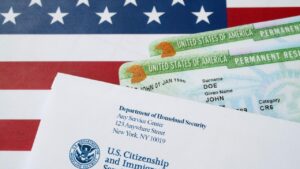
The Diversity Immigrant Visa Programme is the jewel in the crown of United States immigration policy and once again will be open for new registrations this coming October 2024. This is a program annually designed to afford an opportunity for persons from countries with historically low rates of immigration into the United States to gain United States residency, followed by an opportunity subsequently for admission into the United States, only subject to those persons who qualify under rigorous eligibility criteria.  What is the Diversity Immigrant Visa Program? Please be advised that, due to court decisions that are appealable, the U.S. Department of State will be unable to upgrade the Diversity Visa cases for either the 2020 or 2021 program years; all eligible, interested individuals may apply as part of the DV 2026 program year for a new chance to win. Registration Details for DV-2026 The DV-2026 program will begin in October 2024. The registration period conveys the meaning of a limited time frame within which applicants are entitled to submit entries electronically. Entries are not accepted late or in paper form. An applicant must carefully follow every detailed instruction as given by the Department of State to successfully register. There is no charge for registering in the DV Program. The U.S. Citizenship and Immigration Services strongly encourages you to fill in your own entry and not to use visa consultants or agents. If you require someone to assist you in completing your entry, you must be there. That way, you can ensure that information is accurate and you retain your confirmation page and unique confirmation number. Important Dates and Status Checks DV-2024 entrants should continue to check the Entrant Status Check on the E-DV website through September 30, 2024. Submission for DV-2024 opened on October 5, 2022, and closed on November 8, 2022. DV-2025 applicants should hold onto their confirmation number until at least September 30, 2025. Please be advised that, due to court decisions that are appealable, the U.S. Department of State will be unable to upgrade the Diversity Visa cases for either the 2020 or 2021 program years; all eligible, interested individuals may apply as part of the DV 2026 program year for a new chance to win. Selection and Further Processing The real process of selection for the DV Program is by random drawing, based on each region and country’s visa allocations. Moreover, on May 4, 2024, entrants will be updated on the Electronic Diversity Visa website regarding whether an entrant has been selected for further processing by the Department of State. If randomly selected and if physically present in the United States, you could also be eligible for adjustment of status to permanent resident. However, selection will not guarantee a visa interview; the applicant must meet all the eligibility requirements set by the law of the United States for a Diversity Visa.  End The Diversity Immigrant Visa Programme is the way through which a person from a low-immigration country could legally pursue residency in the United States. Since the DV-2026 Program is going to be open in October 2024, a prospective applicant should be very strict on how to go about the registration process in order to keep himself or herself up to date with the status of entry for a better chance of success.

Scroll to Top