
MASTERS VISA

Immigration

Canada Study Permit
Immigration

Canada Study Permit: No Guarantee of Permanent Residency Status

The Canadian government now warns foreign students that study permits do not guarantee permanent residence status in that country. In a discussion with Bloomberg, Immigration, Refugees, and Citizenship Minister Marc Miller told Bloomberg that a study visa wasn’t a way to permanent residency following record inflows of foreign students in Canada. “He said, “That should never be the promise. “People should come here to educate themselves and then perhaps return home to apply those skills in their own country,” he said. “However, that hasn’t been the case lately.” Understanding the Government Stand The Canadian government also considers the labour market requirements now while deciding the routes to PR. Miller stated, “The justification for allowing uncontrolled or uncapped draws from abroad is no longer valid.” This step is towards a more controlled approach to immigration, keeping pace with the nation’s financial and social capacities. Challenges and Criticisms  Despite such clarifications, the stand taken by the government has been criticised.Toronto-based immigration lawyer Ravi Jain says if the government is serious, it should stop touting this path to permanent resident status for students through express entry in its social media marketing. He also pointed out the issue of bad advice from non-lawyer immigration consultants in India and suggested that, just as in the United States and Germany, the limitation of the practice of immigration law to qualified lawyers in this country might ensure more honest and trustworthy guidance for prospective students. Impact on International Students  The Naujawan Support Network has joined the fight for students’ rights by stating at an international level that the government is setting a scenario for a mass deportation of 70,000 international students. They said that the PR pathways have become very restrictive and uncertain, therefore making many international students who have been contributing to Canada’s economy and local communities during the last couple of years extremely distressed. Current Trends in Study Permits Canada, however, will continue to grant a large number of study permits. Ottawa is expecting fewer than 300,000 new study permits this year, compared to 437,000 in 2023—according to Immigration, Refugees, and Citizenship Canada, a total of 216,620 study permits were issued as of May 2024, reflecting an increase compared to the same period in 2023. Conclusion:  With the growing number of students coming to Canada, what prospective students need to know is that securing a study permit is not precisely a ticket to permanent residence status in a country presently mired in immigration policies. Rather, it is making a student aware of policy changes and seeking reliable legal advice that places them better in terms of their educational and immigration plans in Canada.

International Students in UK
Immigration

Visa Changes and Tuition Fees: How Political Shifts Affect International Students in the UK

Traditionally, no country has been as attractive to international students as the United Kingdom. In addition to prestigious universities that act as magnets, the excellence and richness of the cultural environment are irresistible. Nothing remains the same in UK international education. These shifts occur with changing political power and reflect priorities and policies that have been enunciated by successive governments. That may have the most profound effects of all on institutions, international students, and the wider educational ecosystem. Within that context, the article is going to deconstruct how political transitions may influence the UK’s international education sector by drawing on the most recent trends and historical patterns. Visa Policies and International Student Recruitment Visa policy changes are definitely among the most immediate and high-impact changes attending political transitions in the UK. For example, in the period following the Brexit event under the government of Boris Johnson, the introduced Graduate Route visa then allowed international students to stay and work in can stay in the UK for a maximum period of two years post-graduation.The new policy was expected to make the UK more inviting to global talent and offset any future Decline in EU Student Enrolments after Post-Brexit Changes. On the other hand, earlier regimes have been far more oppressive. Changes made in 2012 by the then Home Secretary Theresa May tightening visa conditions and curtailing the possibilities for post-study work led to a sharp decline in the number Moreover, more foreign students have traveled to the UK from countries like India. These fluctuations show just how sensitive international student recruitment really is to both supportive and deterrent visa policies. Tuition fees and financial considerations Political transitions also affect tuition fee structures and the financial support available for international students. In 2012, the then-ruling Conservative-Liberal Democrat coalition tripled tuition fees, which had deep impacts on both domestic and international students. In contrast, for international students, their universities usually set their fees, which vary enormously; therefore, the government policy on funding arrangements is hugely instrumental in shaping these costs. The latest Labour Party manifesto promised to reduce tuition fees while increasing funding for universities. If these policies were supported and passed, no doubt they would dramatically alter the financial scene, making many more international students capable of considering studying in the UK and hailing from diverse economic backgrounds. It also conditions how universities and research institutions can attract and retain international talent. The previous Conservative government has very strongly emphasized developing research and innovation, for example, through the establishment of the Industrial Strategy and the creation of UK Research and Innovation. To consolidate that leadership in these respects on the world scene, the country is challenged by funding fluctuations and uncertainties—particularly around Brexit and the loss of EU grants for research. In this regard, universities have had to negotiate these changes by finding alternative sources of funding and collaborations that will assist them in pursuing their research agendas. Immigration and internationalism Governmental discourses around political rhetoric and societal attitudes toward immigration and internationalism also strongly influence the international education landscape. Theresa May’s hostile environment policy engendered a sense of the UK as unwelcoming, very different from the more open and inclusive rhetoric to come next that aimed at being an attractive destination for global talent. Cultural shifts, which are influenced by political narratives, may make a difference in the decisions taken by prospective international students. A more avant-garde government that espouses diversity, inclusiveness, and global engagement will make the UK more attractive; protectionist or isolationist policies are a turn-off. Recent government changes give telling examples of these dynamics. After the coming of the Graduate Route visa by Boris Johnson, applications surged, reflective of a policy shift to pin hopes on highly-minded talent underpinning the economy and innovative sectors. To this contrast, under Theresa May, it was witness to a considerable drop in international students from countries like India, with visa restrictive policies and hostile environment rhetoric. This was to the detriment of successive governments’ efforts to ensure that the reputation of the UK as friendly destination for international students is maintained. Under Rishi Sunak, efforts have been geared towards researching and developing a more aggressive presence in the global education market. Needless to say, the way this pans out or is modified with time remains to be seen. Prospects for International Education in the UK While the UK resolves its post-Brexit identity and adjusts to other global challenges—not least of which is the COVID-19 pandemic—the sector will continue to be dynamic and fluid. Indeed, any future political change will bring new policies and new priorities, all of which have the potential to further reconfigure the landscape. The immigration policy to be adopted by future governments will also be important and will go on to determine how attractive the UK remains to international students. Different fee structures and mechanisms for financial support have their own implications for accessibility and affordability. Further research and innovation will therefore be imperative if the competitive edge of the UK is to be maintained. Conclusion: This will call for a more detailed and granular exploration of how the changing politics will affect international students in the UK with regards to visa policies, tuition fees, immigration attitude, and funding towards higher education. With every turn of the political wind comes a different situation for international students and their opportunities in the UK. Students, educators, and policymakers need to adapt to these changes so that the UK remains at the forefront of destinations to which talent wishes to move.UK international students

Belarus Visa Free Policy
Immigration

Belarus Visa Free Policy: New Access for Citizens of 35 European Countries

Belarus visa free policy for 35 European countries in a bid to break out into the international world and boost tourism. According to the Ministry of Foreign Affairs of Belarus, the chief details that its website statement concerns are the visa-free regime that speaks of openness, peace, and good neighbourliness. The Policy  This will grant all citizens of these 35 European countries—the European Union member states and the United Kingdom—the right to stay in Belarus for up to 30 days at a time without needing a visa, from July 19, 2024, until December 31, 2024. This act will be part of an all-inclusive approach towards easing staff exchanges and making Belarus more attractive in this direction. List of 35 European Countries The visa-free policy applies to the following countries:  1. Austria 2. Belgium 3. Bulgaria 4. Croatia 5. Cyprus 6. Czech Republic 7. Denmark 8. Estonia 9. Finland 10. France 11. Germany 12. Greece 13. Hungary 14. Ireland 15. Italy 16. Latvia 17. Lithuania 18. Luxembourg 19. Malta 20. Netherlands 21. Poland 22. Portugal 23. Romania 24. Slovakia 25. Slovenia 26. Spain 27. Sweden 28. United Kingdom 29. Iceland 30. Liechtenstein 31. Norway 32. Switzerland 33. Albania 34. North Macedonia 35. Montenegro  Policy Extensions and Conditions According to Belarus’ State Border Committee, the new visa-free policy extends existing visa-free arrangements for the citizens of Poland, Lithuania, and Latvia, introduced in 2022. This prolonged policy will permit the entry into the territory of Belarus several times for the citizens of these countries, provided that their total stay does not exceed 90 days within a calendar year. Important Notes  This policy does not apply to special passports, such as diplomatic and official passports. It is applicable only to ordinary passport holders from the listed countries, who can benefit from this initiative.  Conclusion Belarus has adopted a visa-free procedure for 35 European countries, proving its commitment to increasing international cooperation and promoting the country’s image of being friendly and hospitable. The easing of travels for the citizens of Europe is sure to increase the number of visitors and strengthen its ties with neighbours.

New Zealand Immigration
Immigration

New Zealand Immigration: AEWV and Student Visa Changes for Spouse Support 

It has changed the New Zealand Accredited Employer Work Visa, which will drastically affect the visa applications of partners and dependent children. The change will add consistency and clarity to visa applicants and visa holders as part of broader changes brought in earlier within the AEWV regime. This blog examines the details of these changes, how they affect AEWV holders, and the new opportunities for the spouses of students pursuing higher qualifications in New Zealand.  AEWV Rule Changes  The New Zealand Government has made some critical changes to the AEWV rules as of June 26, 2024, mainly affecting those in ANZSCO occupation levels 4 and 5, for which there is no residence pathway. The critical points are as follows:  Restriction on supporting visa applications: AEWV holders of ANZSCO levels 4 and 5 are not in a position to support work, visitor, or student visa applications for their partners and dependent children. This effectively implies that these family members have to apply independently for a visa to join their AEWV-holder relatives in New Zealand.  Visa Support Based on Job and Earnings: The type of visa that can be supported for families by an AEWV holder depends on the Green List status of their job, their earnings, and their level of skill under ANZSCO. Higher-rated skills, as well as Green List occupations, generally provide more visa support options.  Grandfathering of existing applications: If, before June 26, 2024, the AEWV holder has already sponsored their family member’s visa, then the new occupation would not be required to meet the new ANZSCO skill level requirements. This protection ensures that those already undertaking planning are not disadvantaged due to the introduction of the change. Pathway for Dependents of Student Visa Holders  Along with changes to AEWV, New Zealand is also introducing an updated policy for student spouses. Spouses of students studying for any of the following qualifications are now eligible to apply for a flexible-term work visa that allows flexibility in working in New Zealand. Details are as follows:  Eligible Qualifications: If the student is studying for a Level 7 or 8 qualification on the Green List—graduate certificates and diplomas, bachelor’s degrees, postgraduate certificates and diplomas, and bachelor’s degrees with honours—this will support the work visa application of their spouse under the category of Partner of a Student Work Visa.  Types of Work Visas: The work visa may be granted to the spouse, open or conditional. An open work visa simply means the spouse can work for any employer without salary requirements; otherwise, the conditional work visa may have some specified job-related criteria attached to it.  Conclusion:  These changes to New Zealand’s AEWV and student visa support rules demonstrate that the government is working to continually make immigration easier and harmonise different types of visas. The changes will, without a doubt, pose difficulties for many and, at the same time, open up new opportunities for families that want to start life in New Zealand. If you are an AEWV holder or a student with a spouse, such changes can be very important in making your way around your immigration journey.

Skilled Indian Workers in Germany
Immigration

Skilled Indian Workers in Germany: Addressing Critical Labor Shortages

Germany has already marched forward to attract more skilled Indian workers as an indispensable solution for labour gaps in that country. According to Schengen News, Germany strides ahead to court India persistently and continues to source its large talent base towards meeting its ever-growing requirement of skilled manpower. This blog provides insights regarding this new initiative, strategic collabouration between German and Indian authorities, and which sectors are most hit by labour shortages.  Germany’s New Initiative for Skilled Indian Workers The country is looking to solve its labour gap by adopting a policy that will see large numbers of skilled workers imported from India. This has been confirmed by no less a person than the country’s Labour Minister, Hubertus Heil, who said, “Germany wants to hire a high number of skilled workers from India.” The German Foreign Office, the Federal Ministry of Labour, German businesses, state governments and other ministries are working out this skilled-labour strategy jointly with the Indian side in view of German-Indian government consultations in the fall. A multi-faceted strategy will not only make things easier regarding recruitment but is also supposed to ensure that Germany finally manages to handle its labour market challenge effectively. Need for Indian Talent Minister Heil told Indian students at the Free University of Berlin that it was a welcome addition to Germany’s economy and an important role that Indian professionals could play. “We are inviting bright minds and helping hands from India to Germany,” he said and added that this initiative will benefit both countries.Indeed, the German labour market is facing huge problems; its demographic structure places a question mark over its long-term future. Skilled workers from India, on the other hand, will be an important factor.  Challenges of the Labour Market in Germany A study from the IAB said that Germany will need seven million workers to keep its economy going by 2035. According to a new EURES report on shortages and surpluses, a labour shortage currently exists in more than 70 professions. The main sectors seriously lacking in workers are as follows: Transport ManufacturingConstruction Health Engineering Information Technology (IT)  These sectors are the keystones of Germany’s economic stability and growth, so a lack of skilled workers would threaten these sectors most vitally.  Strategic Collaboration  The Indian Skilled Worker Strategy is a collaborative development effort between different stakeholders. Cooperation between the German Foreign Office, the Federal Ministry of Labour, German businesses, and state governments offers an all-inclusive approach towards solving labour shortages in that particular country. In essence, the agenda of this strategy is to create a smooth channel through which these skilled Indian workers can be integrated to benefit both countries in the German labour market. Conclusion  This proactive step taken by Germany to attract skilled Indian workers testifies to how grim the situation is in terms of labour shortages and stability in its economy. By opening up to skilled professionals from India, Germany intends to fill up vital gaps across sectors that will help keep the country’s growth on track. This would be very helpful not only to Germany but also to the skilled Indian workers who strive to build an international career.

Residence Permits in Finland
Immigration

Automated Monitoring System for Residence Permits in Finland Implemented

Add Your Heading Text Here A Finnish authority has initiated the establishment of a post-decision automated monitoring mechanism for specialist residence permits to reinforce compliance and smooth procedures. That will help verify that holders of such permits continue to meet the requirements of their specialist residence permit, hence maintaining the integrity associated with the immigration regime of the country. It describes the key points of the new system, what it means for foreigners who work in Finland, and the broader background of automated monitoring in the context of Finnish immigration.  Salient Features of the Automated Monitoring System  It is further provided that permits issued on or after January 1, 2023, shall cover such important areas as an automated monitoring system of specialist residence permits.  It ensures that the salary of the holder is at a level commensurate with the required income threshold, which is an important criterion for continuing to be a specialist residence permit holder.  Work Duties and Education Requirements: The system verifies that permit holders continue to fulfil work duties and education requirements—important criteria of the specialist permit.  Application and Scope  A residence permit for special specialists is issued to aliens working on specialist tasks that require special know-how in Finland. Here are some key details:  Validity: In the case of a specialist, a permanent residence permit may be granted for a maximum of two years. Nevertheless, the permit is constantly valid throughout the entire employment relationship.  The requirements for a specialist residence permit include proof of specialised competence and the threshold income. The detailed requirements are available on the website of the Finnish Immigration Service.  Broader context and BAL analysis  The Finnish Immigration Service has been monitoring the decisions made since 2017. Automated monitoring for specialist residence permits has been taken as a step in the continuation of the successful implementation that has been initiated with student and startup entrepreneur permits monitoring. This system is part of a broader government initiative to fight labour exploitation and ensure compliance with immigration regulations.  Future Expansion  The Finnish government is currently expanding automated monitoring to cover all work-based residence permits in a rather proactive drive towards the protection of labour rights and an increase in transparency and efficiency during the immigration process.  Conclusion  An automated monitoring system for specialist residence permits in Finland is one of the key steps in immigration management in the country. It will help ensure that holders of the permit continue to meet or attain the set criteria, raising standards of immigration compliance and protection from labour exploitation. Over time, it will come out to be more reliable and of high integrity for the Finnish immigration framework.

Philippines Cruise Visa
Immigration

Philippines Cruise Visa: New Waiver Programme for Foreign Tourists

The Philippines has instituted a Cruise Visa Waiver Programme, a giant step toward the enlargement of its tourism sector, which will now facilitate visa-required foreign tourists who come for vacations on cruise ships. According to the Bureau of Immigration, this program is courtesy of the Philippine government, through a collaboration with the Department of Tourism and the Department of Justice, pushing forward the establishment of the Philippines as Asia’s premier cruise playground. This blog tackles information about the Philippine Cruise Visa Waiver Programme, the benefits that will be accorded to tourists, and what this could do to boost the tourism industry. The Cruise Visa Waiver Programme The Cruise Visa Waiver Program was formally launched with the expedition on July 16 in the same buildings of the Tourism Infrastructure and Enterprise Authority in Pasay City. Present were Secretary of Tourism Christina Garcia Frasco, TIEZA COO Mark Lapid, and BI Commissioner Norman Tansingco. Under the said program, foreign nationals who need visas shall have easy entry to appreciate the country’s picturesque sceneries and culture. Objectives and benefits “This cruise visa waiver program is a very important one in re-energizing the tourism industry post-pandemic,” said BI Commissioner Norman Tansingco, and he added more color: “This cruise visa waiver program will significantly enhance our thrust to position the Philippines as the premier cruise hub in Asia.” “It will ensure that every passenger on board cruise ships can easily reach out and enjoy the picturesque country,” and this is a great chance not only to tap more tourist traffic but also for the growing industry disposition toward tourism. Key Features of the Philippine Cruise Visa The Philippines Cruise Visa Waiver Programme allows visa-required foreign nationals to enter the country for a limited duration strictly for cruise tourism purposes. Key features of the programme include: Non-Convertible and Non-Extendable: The visa waiver is strictly for cruise tourism and cannot be converted to other types of visas or extended beyond the stipulated duration. Same liner for arrival and departure: The guests would arrive and depart by the same cruise vessel, which would make entry and exit easiest for them. How far this would help tourism and economic recovery 2023 proved quite strong in terms of cruise visits, with over 101,000 passengers and 123 port calls to the Philippines. For 2024, a total of 117 cruise calls and an estimated 118,000 passengers are targeted with the newly implemented Cruise Visa Waiver Programme, which is foreseen to greatly benefit the tourism sector, hence contributing to the country’s economic recovery. “The pandemic had a deep impact on our tourism sector, but with these initiatives, such as the Cruise Visa Waiver, we are optimistic that we could rebound stronger,” said Tansingco. “This program. says we really are doing things for the convenience of our tourists, we’re not going to do something which jeopardizes national security.” Conclusion The Philippines Cruise Visa Waiver Programme is a giant leap in the process of revitalization of the country’s tourism and being one of the premier cruise destinations in Asia. The program looks at easing entry arrangements for foreign nationals requiring a visa to attract more cruise tourists and help the economy bounce back. Enchanting landscapes and rich cultural heritage predispose the Philippines to be a leader in cruise tourism.

Graduate Route Visa
Immigration

Graduate Route Visa extension, fast-track visa process, and expectations of more pro-immigrant policies under the new UK Labour Government.

This new political whirlwind has brought with it a glimmer of hope for international students and associated stakeholders. On July 5, Keir Starmer defeated Rishi Sunak to take the oath as the new Prime Minister of the UK. This places Indian students and other international stakeholders in a hopeful space for more immigrant-friendly policies, particularly with regard to studying in the UK on a graduate route visa. Troubled Past: Graduate Route Visa It has only been a few months since it was reported that ex-UK Prime Minister Rishi Sunak would scrap the UK’s Graduate Route Visa, which permits foreign students to have the opportunity to work or search for employment in the UK for two years after their studies. This was to be a move designed to control high immigration numbers. On the other side of the coin, the Migration Advisory Committee strongly felt that the Graduate Route Visa UK must be retained; otherwise, its abolition would mean fantastic times for universities in the UK, since this places those centres at risk of major financial difficulties, including possible job losses, the eventual closure of courses, and cuts to research activities; some of them even close down in severe cases.Though this was a ray of hope for Indian students seeking to do higher studies in the UK, some other restrictive policies, like restricting international postgraduate research students from bringing their dependents along, have extracted a slice of that hope off the pie. Clearly, as recommended by the group, this had generated a sliver of hope for Indian students aspiring to study in the UK, even though other restrictive policies—like restricting international postgraduate research students from bringing along their dependents—have had an adverse impact on studying in the UK. Hopes Restored with the New Government Now, with Keir Starmer and the Labour Party at the helm of affairs, optimism has returned to the minds of Indian students. Many hoped that the new government would frame policies that favoured international students. Sunak’s government was going to increase financial maintenance, revise English language assessments, and abolish the Graduate Route Visa UK. This is not implemented, but the news of such possibilities scares us. It affects our mental health since we are unable to plan our future.”. Leaders should remember that we have to think about our course, university, finances, living arrangements, finding local guardians, the ROI of the degree, and much more. I hope the new Starmer government will be more considerate to youngsters who just want to acquire some quality education,” Delhi-based 27-year-old Khushi Jain said, who aspires to do a higher degree in the next two years. Labour Party Support Study abroad experts and UK universities are optimistic about the new Labour government. The Labour Party has traditionally been very supportive of flexible immigration policies—a thing central to widening study and work options for international students. This synergy will benefit all students and provide stronger pathways for better prospects in countries like India. The Labour Party has always been very supportive of flexible immigration policies—a vector proposition that holds the key to the betterment of study and work opportunity pathways. This is because the students are aligned, and subsequently, the pathways to better job opportunities open up for them. There is an upbeat sentiment globally and even for Indian students,” said Saurabh Arora, founder and CEO of University Living.  On the other side, Prof. Manuel Barcia, the Dean of Global Engagement at the University of Leeds, said in support of the argument by Arora: “From the signals made by the incoming government before the election, we can fairly speculate that a new government will work closely with universities in a drive to rectify years of neglect under previous administrations.” The new Education Secretary, This much has already been said by Bridget Phillipson. Future Policy Changes and Recommendations The new dependent visa restrictions have made Indian students wary of a degree in the UK. Experts are optimistic that there will be a review; maybe a rollback will come. In the first full year of the Graduate Route Visa UK, in the year ending Q2 2022, 66,000 graduate visas were issued to main applicants and dependents. This grew to more than double to 144,000 visas in 2023, and in 2023, there were 30,000 dependent visas issued. “The revision in the dependent visa policy will, therefore, restore integrity by regaining the confidence of Indian students and keeping the UK at the top as far as destinations for international education are concerned.”. It also foretells the promise of an easier visa route to ensure a faster and easier pathway for gaining the necessary permissions to study in the UK, and hence the work experience by way of more adequate post-study work opportunities that will help them contribute and learn from the UK job market,” said Manisha Zaveri, Joint Managing Director of Career Mosaic. ROI of a UK Degree As international students, one pays substantially higher tuition fees in the UK than local students do. A MAC report said that during the academic year 2021–22, non-EU students at undergraduate and postgraduate taught courses at top-ranked UK HEIs were charged an average of £21,490 (approximately Rs 22 lakh) and £24,040 (approximately Rs 25 lakh), respectively. Those for universities ranked 1000+ had lower fees, with undergraduate study costing £13,740 and postgraduate study costing £8,480, or approximately Rs 8.9 lakh. On the other hand, undergraduate fees for home students in England have been capped at £9,250 since 2017 for a course, which is around ₹9.8 lakh in Indian rupees. International fees account for 22% of total income for the top 100 universities and slightly higher at 23% for those in the 1000+ grouping. While there is the likelihood of universities breaking even or making a profit by inviting international students, the Starmer government is encouraged to make sure that students get a good ROI on their UK degree investment. “A UK degree represents fantastic value for money for Indian students.”. The skills acquired while taking a degree at a

Fast Track Immigration
Immigration

Fast track immigration system to come to Chennai Airport 

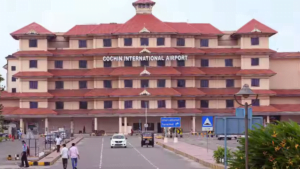
Chennai International Airport is all set to have the Fast Track Immigration-Trusted Traveller Programme, which will help facilitate immigration at the airport. Taken last month by the Centre, this step proves to be effective in de-congesting immigration counters and providing an expedited immigration route for air passengers.  Streamline Immigration at Chennai Airport  Background complaints about the long queues at immigration have prompted the Airports Authority of India to initiate preparatory work for introducing the Fast Track Immigration system at the city airport. It will have four counters each in the arrival and departure halls of the international terminal. Installation work will take a month, and the Bureau of Immigration will decide on a launch date, possibly in a few months.  How the Fast-Track Immigration System Works for Travellers Immigration system works: Registration: Travellers seeking to join will have to fill in their details and upload certain documents on a given portal. Verification: On verification of the same, a list of ‘Trusted Travellers’ will be made, and all these people’s information will be fed into the e-gate systems. Biometrics: Flyers will have to provide their biometrics at the FRRO office. This registration shall be valid for as long as the passport is valid and can be renewed. E-gate access: At the e-gate, a traveller will scan the boarding card and the passport. The system will verify the biometrics, opening the e-gate for quick immigration. This service comes free of charge and is expected to cut down waiting periods substantially, making travel a far more pleasurable experience.  Initial Rollout and Expansion  The Fast Track Immigration system was introduced for the first time at New Delhi’s Indira Gandhi International Airport in June. Chennai is one of the initial airports to get this service, after Hyderabad, Bengaluru, Kochi, Ahmedabad, Mumbai, and Kolkata. The programme will be expanded eventually to 21 other airports across the country.  Addressing passenger concerns  Passenger feedback has been instrumental in the formulation of this program. Krishna B, a recent passenger, expressed his outrage on X (formerly Twitter) over the poor staff at the immigration counters at Chennai International Airport. The new system envisions tackling such concerns by coming up with an efficient and friendly user interface for immigration.  Conclusion: Fast-track immigration at Chennai Airport is going to redefine a passenger’s experience of international travel. Under this initiative, reducing waiting times and making the immigration process easy and hassle-free have been facilitated for all.

Thailand 5-Year Visa
Immigration

Thailand 5-Year Visa for Digital Nomads: Everything You Need to Know

Thailand has introduced an exciting opportunity for digital nomads and remote workers—the Destination Thailand Visa (DTV). This five-year multiple-entry visa is designed to attract long-term visitors, providing an excellent alternative to standard tourist visas. In this comprehensive guide, we will explore everything you need to know about the DTV, including eligibility requirements, costs, and benefits. What is the Destination Thailand Visa? The DTV stands for a multiple-entry visa to the Kingdom of Thailand that includes stays of up to 180 days each calendar year, extendable for another 180 days. It’s a really perfect option for digital nomads who would like to go deep into the dynamic culture of Thailand but maintain their working duties. Cost of the Thailand DTV The DTV is offered at an affordable price of 10,000 THB compared to other similar visas covering the Southeast Asian region. Applicants are required to be at least 20 years old and be able to show proof they have enough money that covers the payment of this visa locally. To be eligible to apply for the DTV, one must satisfy the following requirements: Age: Applicants shall not be less than 20 years old.Financial Stability: Proof of at least 500,000 THB in the bank account to support the whole stay in Thailand.Employment: Proof of employment with a registered company is a must.Visa Fee: Applicants should have sufficient funds for the 10,000 THB visa fee. These requirements are subject to change; hence, an update on any changes in such has to be sought from relevant official sources. Why the DTV? The Destination Thailand Visa offers loads of benefits to digital nomads who move to Thailand.These include: Lower Income Requirements: Compared to other similar visas available in Southeast Asia, the DTV has a far more lenient income requirement coupled with the fees. Remote work for international clients is legal: The visa allows holders to do legal remote work for clients anywhere in the globe. Family-friendly: Holders of this visa can bring along their spouse and children below 20. Tax-free: There are no taxes charged on the income derived from foreign sources during the stay in Thailand. However, such DTV does not permit persons to be employed by Thai companies. Furthermore, any change of visa type shall render the DTV cancelled. Application Process Since the exact process of applying for the DTV has not been specified, the following are some preliminary steps which would be helpful:Verify Eligibility: Ensure that all eligibility criteria are met.Prepare Documents: Have ready all the documents such as proofs of employment and statements from banks, among other proofs.Continue to monitor announcements for any new updates, which are targeted to be issued in July, detailing procedures for application. Conclusion: The Destination Thailand Visa is a super opportunity for all those digital nomads who want to explore Thai culture without giving up productive work. With such an affordable price and relaxed income requirements, not to mention the family-friendliness—no wonder the DTV would remain Blaze’s best-selling product among remote workers. Stay tuned for further updates, and start preparing your application now to make the most of such a unique visa program.

Scroll to Top